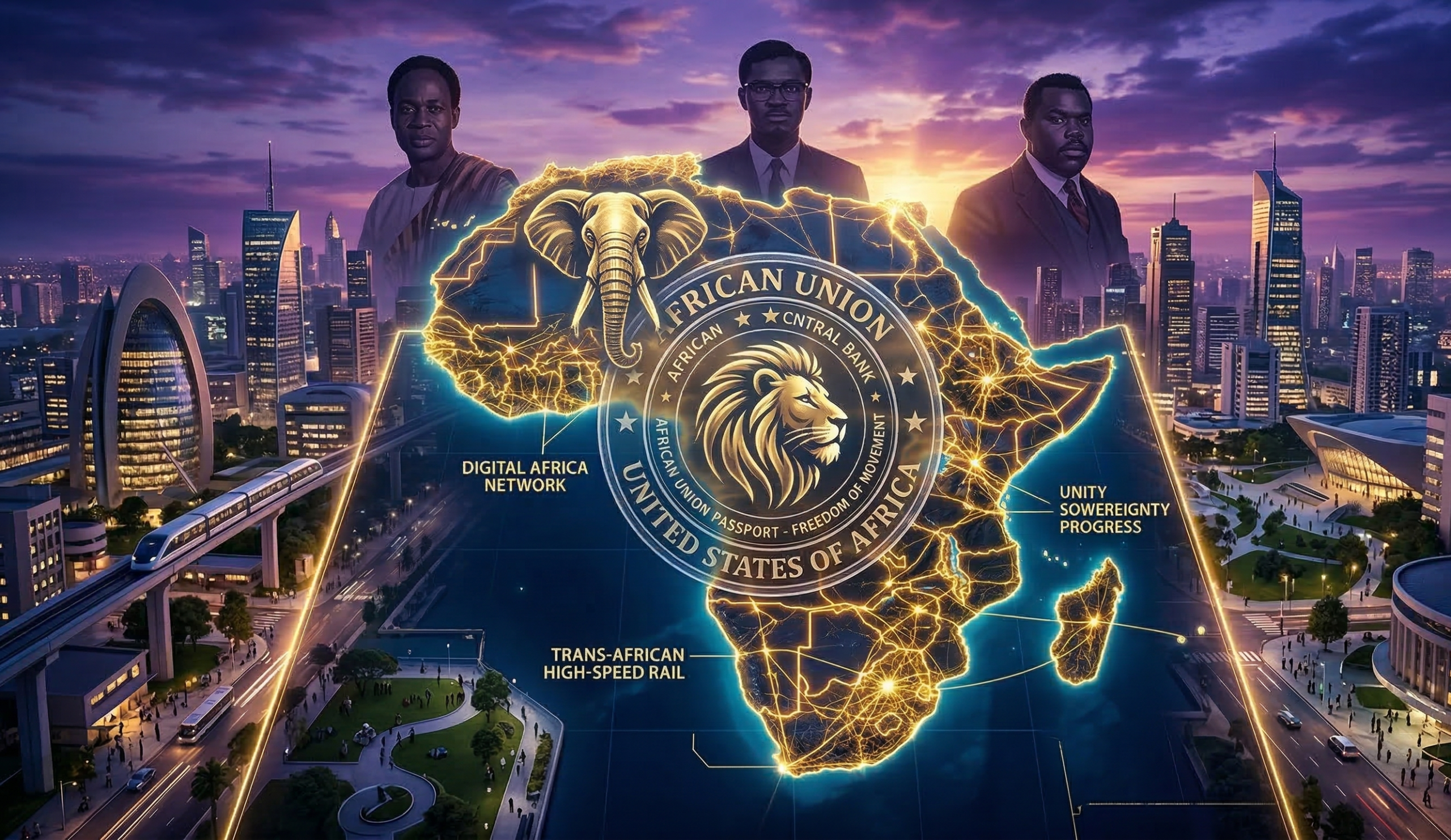
Introduction: The Imperative of Unity
For over a century, the call for Pan-Africanism has resonated from the halls of Addis Ababa to the streets of Harlem. Yet, today, Africa remains divided into 54 separate jurisdictions—many with borders drawn by European powers during the 1884 Berlin Conference. These artificial divisions are not merely historical relics; they are the primary mechanisms of modern neo-colonialism.
A “United Pan-African Future” is no longer a romantic dream of poets; it is a pragmatic geopolitical necessity. In an era of global superpowers and massive trading blocs, a fragmented Africa is a vulnerable Africa. To secure the prosperity of the continent and its diaspora, Africa must move toward a unified political and economic framework that can speak with a single, unshakeable voice on the world stage.
The Geopolitical Reality: Unity as Power
In the current global order, size matters. Individual African nations, even the largest economies like Nigeria, Egypt, or South Africa, lack the singular leverage to dictate terms to global powers or multinational corporations.
The Power of a Unified Front:
- Negotiating Leverage: A United Africa would represent a market of 1.4 billion people—the largest single market in the world. This allows the continent to demand fair trade terms, rather than accepting lopsided “partnership agreements” designed to extract raw materials.
- A Permanent Seat on the UN Security Council: A unified African state would possess an undeniable claim to a permanent, veto-wielding seat, ensuring that African issues are no longer decided by non-African powers.
- Defense Sovereignty: A unified African military command would eliminate the need for foreign military bases on African soil, ending the era where external forces dictate continental security.
Dismantling Neo-Colonial Systems
Neo-colonialism operates through the “balkanization” of Africa—keeping nations small, dependent, and in competition with one another for foreign investment. A united future dismantles these systems by:
- Ending Monetary Dependency: Replacing colonial-era currencies, like the CFA franc, with a single African currency backed by the continent’s vast gold and mineral reserves.
- Resource Sovereignty: Instead of individual countries competing to sell raw lithium or cobalt at the lowest price, a Pan-African Resource Bloc could set global prices, similar to OPEC, ensuring that wealth stays in Africa.
- Debt Shielding: A unified African Central Bank would provide the liquidity needed to fund infrastructure, ending the cycle of high-interest “debt-trap diplomacy” from Western and Eastern lenders.
The Economic Engine: A Borderless Continent
The African Continental Free Trade Area (AfCFTA) is the first major step toward this future. However, trade is only the beginning. True unity requires:
- Total Freedom of Movement: The “African Passport” must become the standard, allowing any African or member of the diaspora to travel, work, and settle anywhere on the continent without the indignity of colonial-era visa requirements.
- Integrated Infrastructure: A United Africa can prioritize trans-continental high-speed rail, shared satellite networks, and a unified power grid that solves the continent’s energy deficit once and for all.
- Harmonized Law: Standardizing commercial and property laws across the continent reduces the “risk” for diaspora investors and local entrepreneurs, creating a frictionless environment for growth.
Why the Diaspora is Central to the United Future
A United Africa is the only entity capable of providing a “Global Shield” for the African diaspora. When Africa is strong, the diaspora is respected.
The diaspora brings the “Pan” to Pan-Africanism. Having lived across every continent, the diaspora understands the global systems of power and can help design the institutions required for a unified state. A United Africa would formally recognize the diaspora as its “Sixth Region,” granting them voting rights and political representation in a continental parliament. This creates a reciprocal relationship: the diaspora provides the global reach, and the United Africa provides the ancestral foundation and sovereign protection.
Challenges to Unity
The path to a United States of Africa faces significant resistance:
- Ego and Sovereignty: National leaders are often reluctant to cede power to a central continental authority. Solution: Transition to a “Federated” model, where states maintain local governance while ceding defense, foreign policy, and currency to the union.
- External Interference: Global powers benefit from a divided Africa and will actively fund secessionist movements or political instability to prevent unity. Solution: Robust Pan-African intelligence and internal security cooperation to counter foreign subversion.
- Language and Cultural Barriers: Colonial languages (English, French, Portuguese) still divide the continent. Solution: Promotion of indigenous “bridge languages” like Swahili and the use of digital translation technology to foster direct communication.
The Role of the African Union (AU)
The AU must evolve from a consultative body into a legislative authority. This requires:
- Directly Elected Pan-African Parliament: Giving the citizens of Africa a direct vote in continental affairs, rather than just relying on appointed officials.
- Independent Funding: Moving away from donor-funded budgets (where the EU often pays for AU operations) toward a self-sustaining system funded by a small percentage of continental trade revenue.
Conclusion: The Final Frontier of Liberation
The liberation of Africa did not end with the lowering of colonial flags in the 1960s. That was merely the first phase. The final phase is Political and Economic Union. A united Africa is the only path to ensuring that the 21st century belongs to the African people. It is the only way to ensure that “Never Again” applies to the exploitation of our resources and the marginalization of our people.
The future is Pan-African. It is a future where an African child born in Kingston, London, or Nairobi can look at a map of the continent and see not a collection of fragmented states, but a single, powerful home.
JOIN THE MOVEMENT
Unity requires more than just policy—it requires a shared identity. Represent the vision of a United Africa.
Explore the Pan-African Collection
LAST UPDATED
March 10, 2026