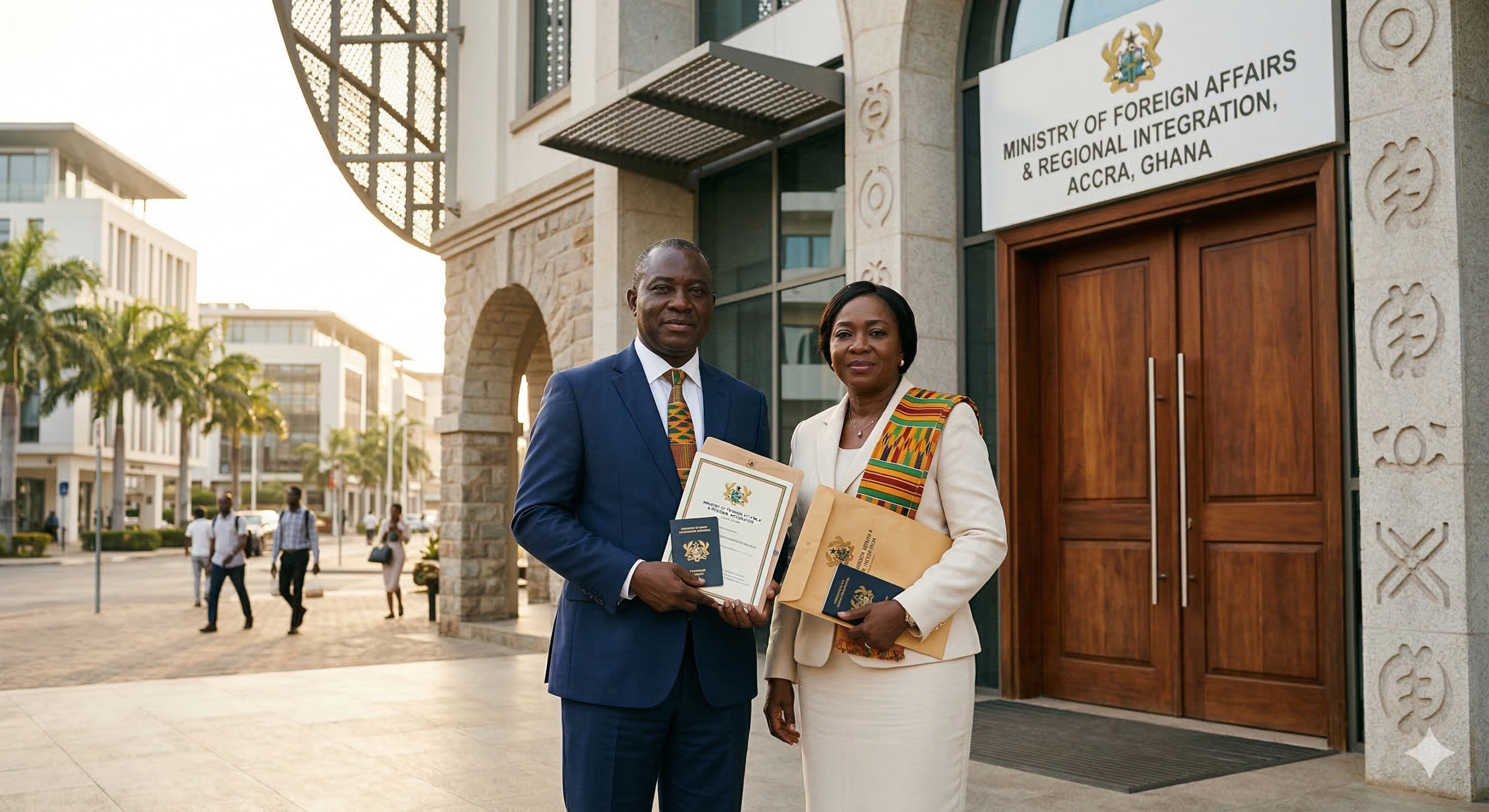
The question of whether descendants of the Transatlantic Slave Trade should have a legal right to return to Africa is no longer a fringe conversation. It is a policy debate that has reached African heads of state, the United Nations, and legislative chambers from Washington to Accra. This article explains what the right to return to Africa means in practical terms, where it stands as policy today, why it matters for both the African diaspora and the continent, and what a serious framework for implementation could look like. If you believe this conversation matters, read through to the end.
What Is the Right to Return to Africa?
The right to return to Africa, in its most direct definition, is the legal and political claim that descendants of Africans forcibly removed during the Transatlantic Slave Trade have a legitimate right to reclaim African citizenship, residency, or political belonging on the African continent.
This is distinct from general immigration. It is a reparative claim — rooted in the argument that the original act of enslavement constituted an illegal severing of people from their homeland, culture, language, and political identity. A right of return would acknowledge that severance and offer a structured path to repair it.
The concept draws legal precedent from existing frameworks. The State of Israel enshrined a right of return for Jewish people globally in 1950. Germany extended citizenship to descendants of Jews expelled by the Nazi regime. Armenia has created pathways for diaspora Armenians to reclaim national belonging. These are not radical ideas — they are accepted instruments of international law when applied to populations displaced by historical injustice.
Which African Countries Have Taken Steps Toward This Policy?
The most significant concrete step taken to date came from Ghana. In 2019, the Ghanaian government launched the Year of Return, marking 400 years since the first enslaved Africans arrived in colonial America. The initiative invited African diaspora people to visit, invest, and, in some cases, apply for citizenship under Ghana’s Right of Abode policy.
That same year, Ghana’s parliament granted citizenship to a number of diaspora descendants, including American activist and scholar Dr. Amoaba Gooden and several others who relocated permanently. It was a symbolic but legally meaningful gesture.
Beyond Ghana, other nations have created or discussed relevant pathways:
- Benin launched its own diaspora return program and formally apologized for its role in the slave trade, creating a citizenship track for diaspora descendants.
- Sierra Leone granted citizenship to African Americans including activist Ishmael Jimnah, who became the first African American to receive Sierra Leonean citizenship under diaspora policy.
- Senegal has created structures for diaspora engagement and long-term residency.
- The African Union formally designated the African diaspora as the Sixth Region of Africa in 2003, recognizing diaspora Africans as a legitimate part of the continental body — though this has not yet been translated into uniform citizenship rights.
These are meaningful first steps, but they remain inconsistent, voluntary, and dependent on individual governments rather than a continental framework.
Why Do Descendants of Enslaved Africans Want to Return?
The motivations are practical, political, and cultural — and they are not uniform. It is important not to reduce this to sentiment. The demand for a right to return to Africa reflects concrete grievances and rational assessments of political conditions.

For many African Americans, Caribbean nationals, and Afro-Brazilians, the calculation is straightforward: centuries of systemic exclusion from wealth-building, persistent racial violence, and a political system that has repeatedly failed to deliver equality have made the idea of building a life on African soil worth considering seriously.
For others, the motivation is strategic. They see a continent of 1.4 billion people with the youngest population in the world, abundant natural resources, and growing economies — and they recognize that diaspora skills, capital, networks, and knowledge could accelerate African development in ways that benefit both the returnee and the continent.
There is also a question of identity. Diaspora descendants of the slave trade are among the few people on earth who cannot name their country of ancestral origin with certainty. The right to return is also, in this sense, a demand for historical acknowledgment — that a people were taken, not lost.
Should African Citizenship Be a Right or a Privilege for Diaspora Descendants?
This is the central political question, and it deserves a direct answer.
A privilege is discretionary. A right is enforceable. The difference matters enormously.
If citizenship for diaspora descendants is framed as a privilege — something African governments may extend when politically convenient — then it remains unstable. A new administration can retract it. It can be conditioned on financial investment thresholds that exclude working-class diaspora members. It becomes a tool of soft diplomacy rather than a mechanism of justice.
If framed as a right, grounded in international law and African Union policy, it creates a durable framework that cannot be revoked by political winds in any single country. It also demands that the African Union take a more decisive role in defining who the diaspora is, what their relationship to the continent is, and what obligations African states carry toward them.
Critics of the right-of-return framework raise legitimate concerns. They ask: How do you determine eligibility? How do you manage the administrative burden? What happens to land access, labor markets, and political rights in recipient countries? These are serious questions that deserve serious policy answers — not dismissal.
The answers exist. DNA ancestry databases, colonial-era shipping records, and oral historical archives have all been used in reparations scholarship. A tiered framework — beginning with residency, moving to permanent residency, and finally to full citizenship — could manage scale. Community-based integration structures, similar to those used in refugee resettlement, could ease the transition.
The question is not whether it is possible. It is whether the political will exists.
How Would a Right of Return to Africa Benefit the Continent?
This question is often reversed — the debate focuses on what Africa gives the diaspora. But the economic and political case runs in both directions.
The African diaspora currently sends approximately $100 billion in remittances to Africa annually, according to World Bank data. That figure already exceeds foreign direct investment from many Western donor nations. It is the baseline — what happens without a formal right-of-return framework, without structured incentives, and without citizenship as a foundation.
If even a fraction of the 40 million African Americans, 15 million Afro-Brazilians, and millions more across the Caribbean were to repatriate or invest under a formal legal framework, the capital flows, skills transfer, and entrepreneurial activity would be significant. Not as charity — as partnership.
Africa’s agricultural sector alone presents a clear example. The continent holds roughly 60% of the world’s uncultivated arable land. African food security is a genuine strategic vulnerability, but it is also a development opportunity. Diaspora returnees with agricultural expertise, capital, and market connections could contribute meaningfully to closing the food production gap.
Beyond economics, diaspora returnees bring political experience from functioning democracies, technical expertise across medicine, law, engineering, and technology, and cultural networks that span multiple continents. That is not a burden to host nations. It is an asset — if managed through sound policy.
What Would a Credible Right of Return Policy Look Like?
A workable policy framework requires specificity. Advocacy without policy design does not move governments. The following elements represent a starting outline:
Eligibility: Documented or DNA-evidenced descent from populations removed from Africa during the Transatlantic Slave Trade (roughly 1500–1900). A tiered verification process administered by a joint African Union-diaspora commission.
Pathway: Three-stage process — (1) Diaspora Residency Permit, valid for 5 years and renewable; (2) Permanent Residency, after 5 years of continuous residency; (3) Citizenship, after a further qualifying period or through legislative fast-track for those meeting specific investment or civic contribution thresholds.
Rights at each stage: Full economic participation rights from stage one. Voting rights upon citizenship. Property ownership rights established in each member state’s national law.
Funding: A dedicated African Union Diaspora Return Fund, partially financed by a small levy on diaspora remittances to the continent, matched by participating member states and multilateral development banks.
Governance: A standing African Diaspora Affairs Commission within the African Union, with elected diaspora representation — not appointed by African governments, but selected through diaspora community structures.
This is not a blueprint — it is a starting point. Policy requires iteration, negotiation, and political courage. But the absence of a framework is not neutrality. It is a decision to maintain the status quo.
Support the Right of Return Movement
The conversation is happening. Where you stand matters.
LAST UPDATED
Last Updated: March 10, 2025