Right to Return to Africa: What the UN Abstention Vote Reveals
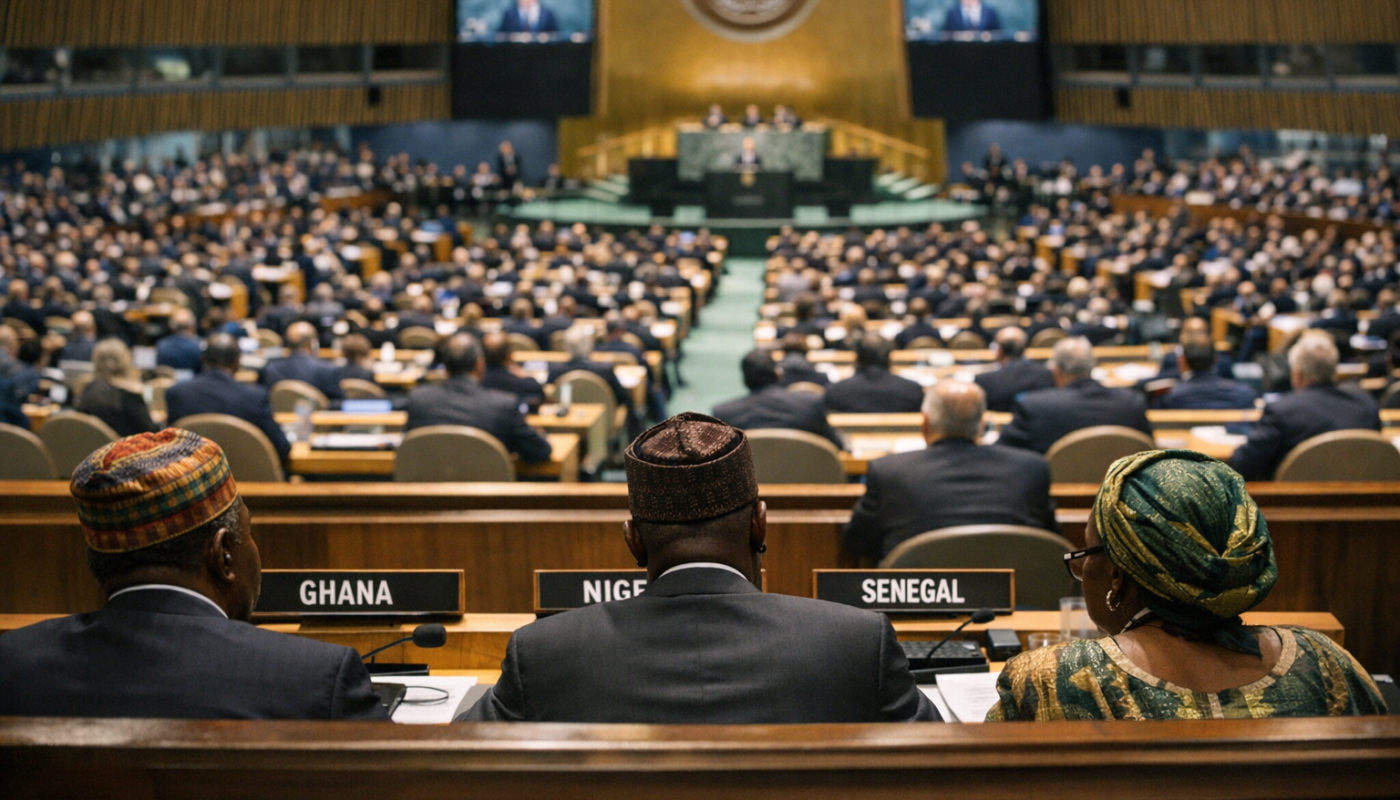
In September 2023, the United Nations Human Rights Council voted on a resolution calling for the formal recognition of the Transatlantic Slave Trade as a crime against humanity and for the establishment of international mechanisms to address its enduring consequences. The resolution, championed by Ghana and the broader African Group at the UN, passed, but with a striking pattern of abstentions. The United States, the United Kingdom, Germany, France, the Netherlands, and virtually every other Western liberal democracy either abstained or voted against. Russia did not oppose it.
That voting pattern is not an accident. It is a policy position; one with legal, economic, and geopolitical logic behind it. Understanding why those abstentions happened is essential to understanding the structural obstacles facing the right to return to Africa for descendants of enslaved Africans, and why movements like CRDEA exist in the first place.
What Did the UN Actually Vote On?
The resolution in question was not a symbolic gesture. It called on member states to recognize the Transatlantic Slave Trade; the forced removal of an estimated 12.5 million Africans between the 15th and 19th centuries; as a crime against humanity under international law, and to establish concrete accountability mechanisms including reparations frameworks (UN Human Rights Council, 2023).
The language mattered. Under international law, crimes against humanity carry specific legal obligations. Recognition triggers downstream consequences: it opens the door to reparations claims, creates state accountability, and establishes legal precedent that descendants of enslaved Africans hold rights that were violated; rights that have never been remedied.
The African Group, supported by Caribbean nations through CARICOM, argued that recognition was a necessary first step toward justice. The resolution did not specify dollar amounts. It did not name defendant states. It asked for acknowledgment and a process. That was enough for Western nations to abstain.
Why Did Western Nations Abstain, and What Are the Real Reasons?
The official positions of abstaining nations cited concerns about “legal clarity,” “jurisdictional complexity,” and the need to avoid “divisive” precedents. These are procedural arguments. The substantive reasons run deeper.
Financial liability is the primary driver. Several economists and legal scholars have attempted to quantify what reparations for the slave trade and its consequences might cost. Thomas Craemer of the University of Connecticut estimated in 2015 that reparations owed to African Americans alone could exceed $14 trillion (Craemer, 2015). Extend that logic globally, to the Caribbean, to Brazil, to the entire African diaspora; and the number becomes politically unmanageable for any Western treasury.
Precedent is the second concern. If the Transatlantic Slave Trade is formally classified as a crime against humanity with accountability obligations attached, it creates a template applicable to other historical atrocities, colonialism broadly, the Belgian Congo, the dispossession of indigenous peoples across the Americas and Australia. Western nations are not prepared to open that ledger.
Economic architecture is the third. The wealth accumulated through enslaved African labor is not merely historical. It is structural. It funded the industrial revolution in Britain. It capitalized the early American banking system. It built the sugar, cotton, and tobacco industries that underpinned European modernity (Williams, 1944). Recognizing the slave trade as a crime against humanity does not just address the past, it calls into question the legitimacy of present wealth distributions.
The abstentions, in short, were not a failure of moral courage. They were a rational protection of economic interest. That is important to understand, because it tells you precisely what must change — and why legal infrastructure, not moral persuasion, is the path forward.
What Does This Have to Do With the Right to Return to Africa?
The connection is direct. The right to return to Africa for descendants of enslaved Africans rests on the same legal and moral foundation as the UN resolution: the argument that forced removal was a crime, that it created an unjust condition of statelessness and dispossession, and that remedies are owed.
When Western nations abstain on the slave trade resolution, they are simultaneously rejecting the legal premise on which diaspora return rights rest. A vote against recognition is a vote against the framework that would make the right to return legally actionable. This is not a coincidence. It is a consistent policy position, one that has been maintained across Democratic and Republican administrations in the United States, across Labour and Conservative governments in the United Kingdom, and across varying coalitions in Europe.
The African Union’s designation of the global diaspora as the Sixth Region of Africa in 2003 was a powerful symbolic counter-move (African Union, 2003). It declared, at a continental level, that displacement did not sever the political and cultural relationship between Africa and its diaspora. But the AU’s declaration lacks the enforcement mechanism that UN recognition would provide. The gap between symbolic acknowledgment and legal standing is precisely where diaspora rights currently stall.
What Can the African Diaspora and African Nations Do Now?
Waiting for Western nations to change their position voluntarily is not a strategy. History does not support optimism on that point. What is possible, and what is already happening in parts of the continent is the construction of bilateral, and multilateral frameworks that do not require Western consent.
Consider what actionable steps look like:
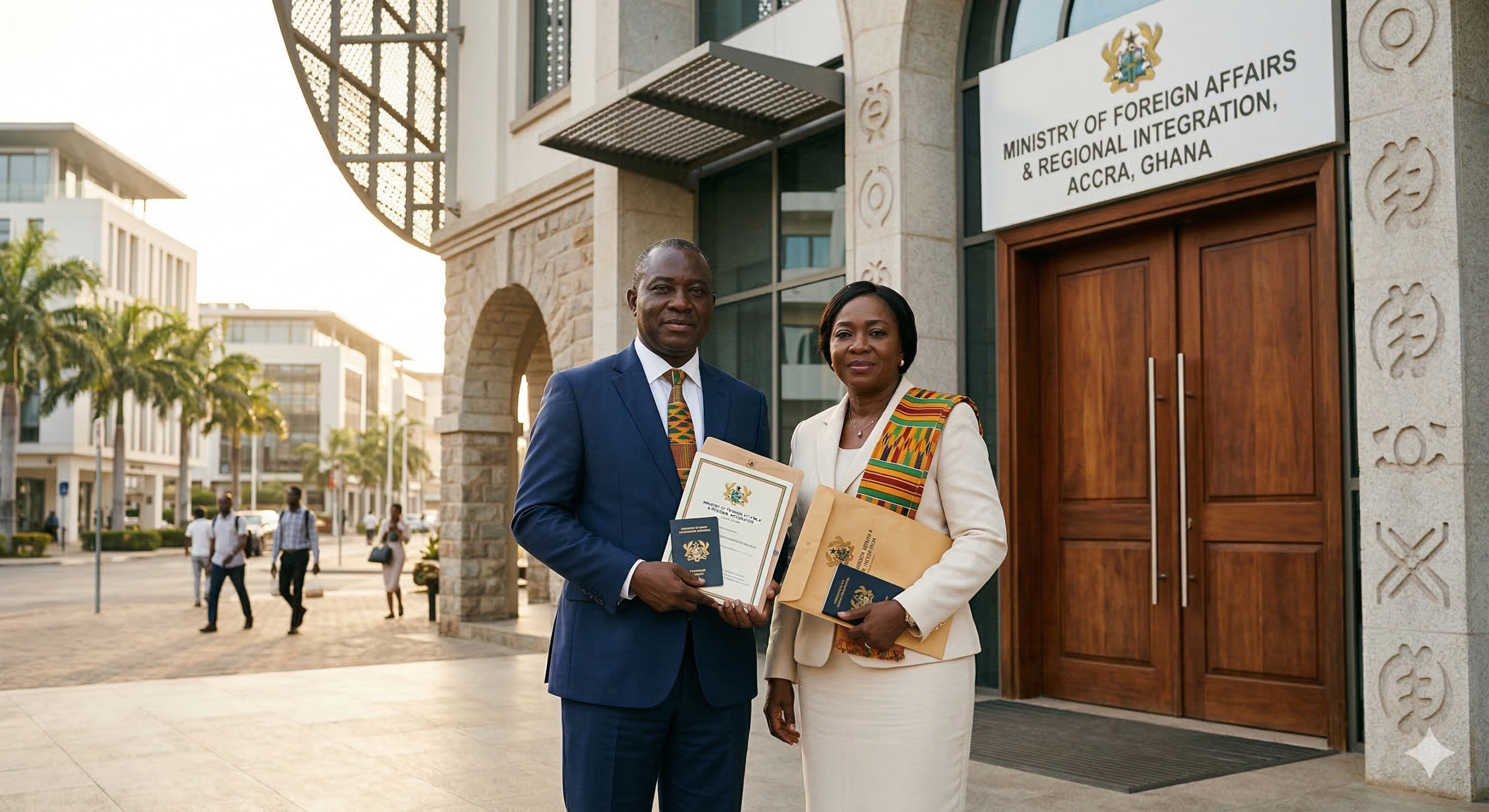
- Ghana’s Year of Return (2019) demonstrated that diaspora repatriation can be policy, not aspiration. Thousands of African Americans and Caribbean nationals received citizenship offers under the Right of Abode framework Ghana extended. The political will exists.
- The African Continental Free Trade Agreement (AfCFTA) creates an economic architecture that, if diaspora professionals can access it, makes return economically viable rather than aspirational.
- CARICOM’s reparations commission has been building the legal and economic case for Caribbean reparations since 2013 — documenting, quantifying, and filing. That methodology is replicable across the broader diaspora.
- Bilateral treaties between African Union member states and diaspora-heavy nations in the Americas and Europe can establish Right of Abode frameworks outside the UN system entirely.
- Diaspora investment in African agriculture, infrastructure, and education reduces the continent’s dependence on Western aid — and therefore Western political leverage. Economic sovereignty is the precondition for legal sovereignty.
None of these require a UN resolution to proceed. But the UN vote, and the abstentions, makes the political terrain clearer. Reform will not come as a gift. It must be built, institution by institution, treaty by treaty, dollar of diaspora investment by dollar of diaspora investment.
Why Does This Matter for Pan-African Unity?
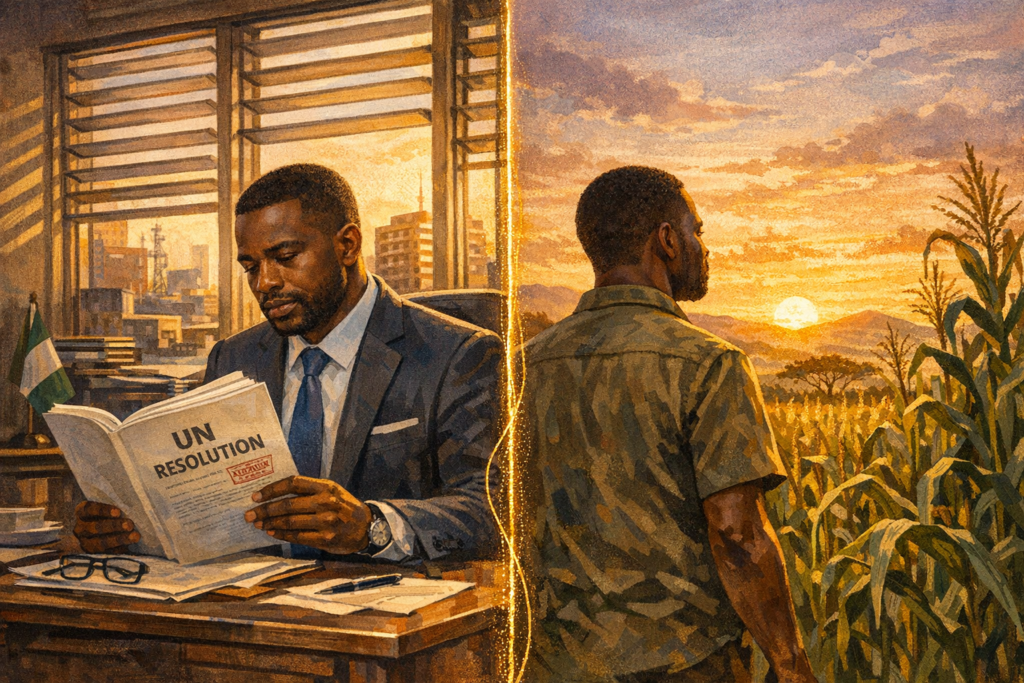
The voting pattern at the UN reveals something that Pan-African thinkers from Marcus Garvey to Kwame Nkrumah to Walter Rodney understood and documented: that the interests of Western states with respect to Africa and the African diaspora have been consistent across centuries and across ideological differences. France and the United States disagree on trade, on NATO, on cultural policy. They agreed on abstaining from a resolution about the slave trade.
That consistency should inform strategy. Pan-African unity — the principle that Africa’s 54 nations and its estimated 1.4 billion diaspora members share a common interest in continental sovereignty — is not sentiment. It is a structural response to a structural reality. Divided, African nations are individually too small to move institutions like the UN Human Rights Council. United, and with diaspora political and economic weight behind them, the calculus changes.
The right to return to Africa is not simply about individual journeys home. It is about the construction of a political and economic bloc large enough to change the terms on which Africa engages the world. The UN vote made the necessity of that bloc visible. Building it is the work.
References
- African Union. (2003). Declaration on the African Diaspora as the Sixth Region of Africa. African Union Assembly, Maputo.
- Craemer, T. (2015). Estimating Slavery Reparations: Present Value Comparisons of Historical Multigenerational Reparations Policies. Social Science Quarterly, 96(2), 639–655.
- UN Human Rights Council. (2023). Resolution on Elaborating Complementary Standards on Racism and Racial Discrimination. 53rd Session, Geneva.
- Williams, E. (1944). Capitalism and Slavery. University of North Carolina Press.
The mission doesn’t run on moral arguments alone. It runs on infrastructure.
Every piece of CRDEA gear you buy funds the legal research, policy advocacy, and logistics planning behind Right of Abode. Wear the mission. Fund the return.
If this article shifted your thinking, share it. The more people understand the legal and economic stakes, the stronger the case becomes.
LAST UPDATED
Last Updated: April 1, 2026